Project Info
Genre: Top-down / Third-person Action Shooter
Development Duration: 4 Months
Team: Solo Project
Role: Technical Designer (Gameplay systems, AI Design, Level Design) and UI Designer
Skills: Blueprinting, System Design, Gameplay Design, AI Programming, UI Design
Engine: Unreal Engine 5
Development Duration: 4 Months
Team: Solo Project
Role: Technical Designer (Gameplay systems, AI Design, Level Design) and UI Designer
Skills: Blueprinting, System Design, Gameplay Design, AI Programming, UI Design
Engine: Unreal Engine 5
Project & Goal
- Companion Game is a fully playable vertical slice developed for my university Final Year Project and iterated further independently, featuring two different fully playable vertical slice's that explore 1 design challenge: Companion AI and Command design in real-time action genres
- The project investigates how companions can evolve past the passive AI followers and become active participants and extensions of the player's toolkit
- The research project focuses on balancing player agency with companion independence
- The project investigates how companions can evolve past the passive AI followers and become active participants and extensions of the player's toolkit
- The research project focuses on balancing player agency with companion independence
My Work
Design Iteration 1 - Top-Down Project
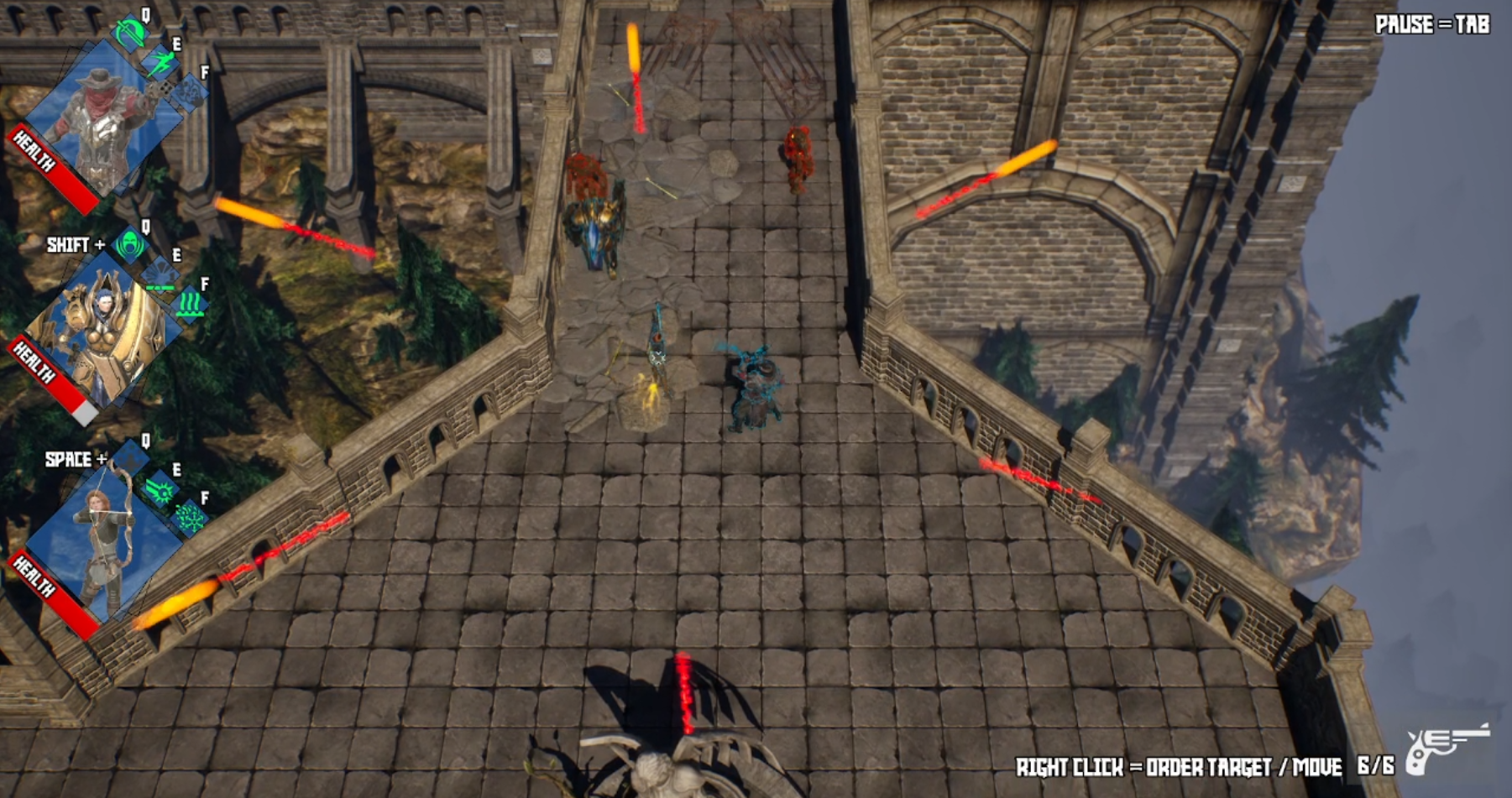
- Developed the initial top-down action shooter as part of my Final Year Project for university to explore companion AI design and command control systems in a real-time action environment / genre
- Designed the Teamup system around activating companion abilities individually or combining them into stronger "Teamup Abilities" that can drastically affect combat but require more coordination skill from the player
- Used the perspective to clearly communicate companion location, intent, cooldowns, and ability interactions
- Conducted playtesting and evaluation throughout development to understand how players interacted with their companions
- Designed the Teamup system around activating companion abilities individually or combining them into stronger "Teamup Abilities" that can drastically affect combat but require more coordination skill from the player
- Used the perspective to clearly communicate companion location, intent, cooldowns, and ability interactions
- Conducted playtesting and evaluation throughout development to understand how players interacted with their companions
- The project did successfully demonstrate that companions could become important mechanically and during combat, but I felt as if I made too easy for my goal by using a genre that allowed for this type of control instead of pushing the genres less attuned for it; and also raised new questions about player agency
Design Iteration 2 - Third-Person Evolution
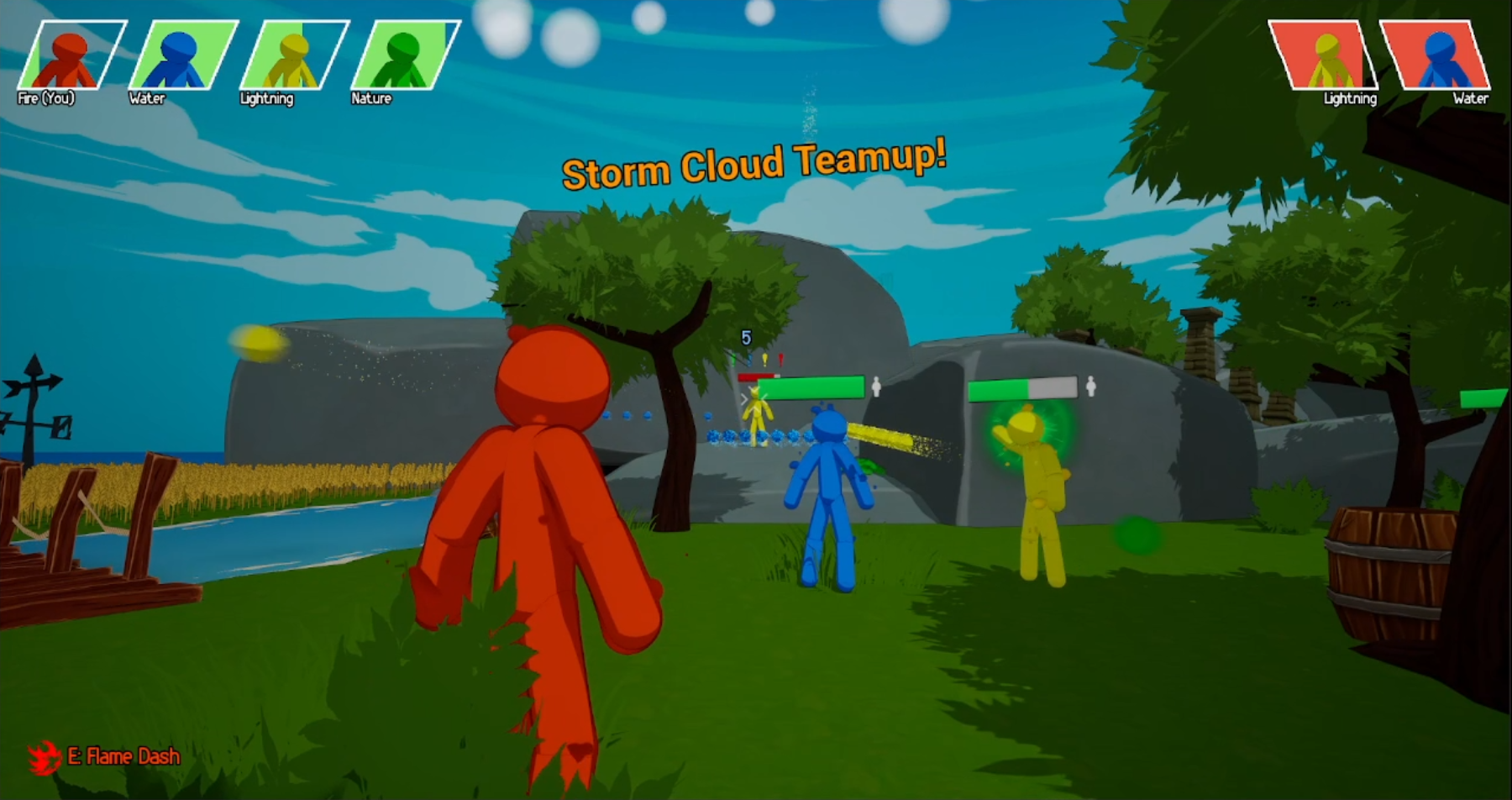
- Continued my design challenge independently once the previous iteration was submitted for my Final Year Project, completely reworking the project into a third-person bullet hell vertical slice
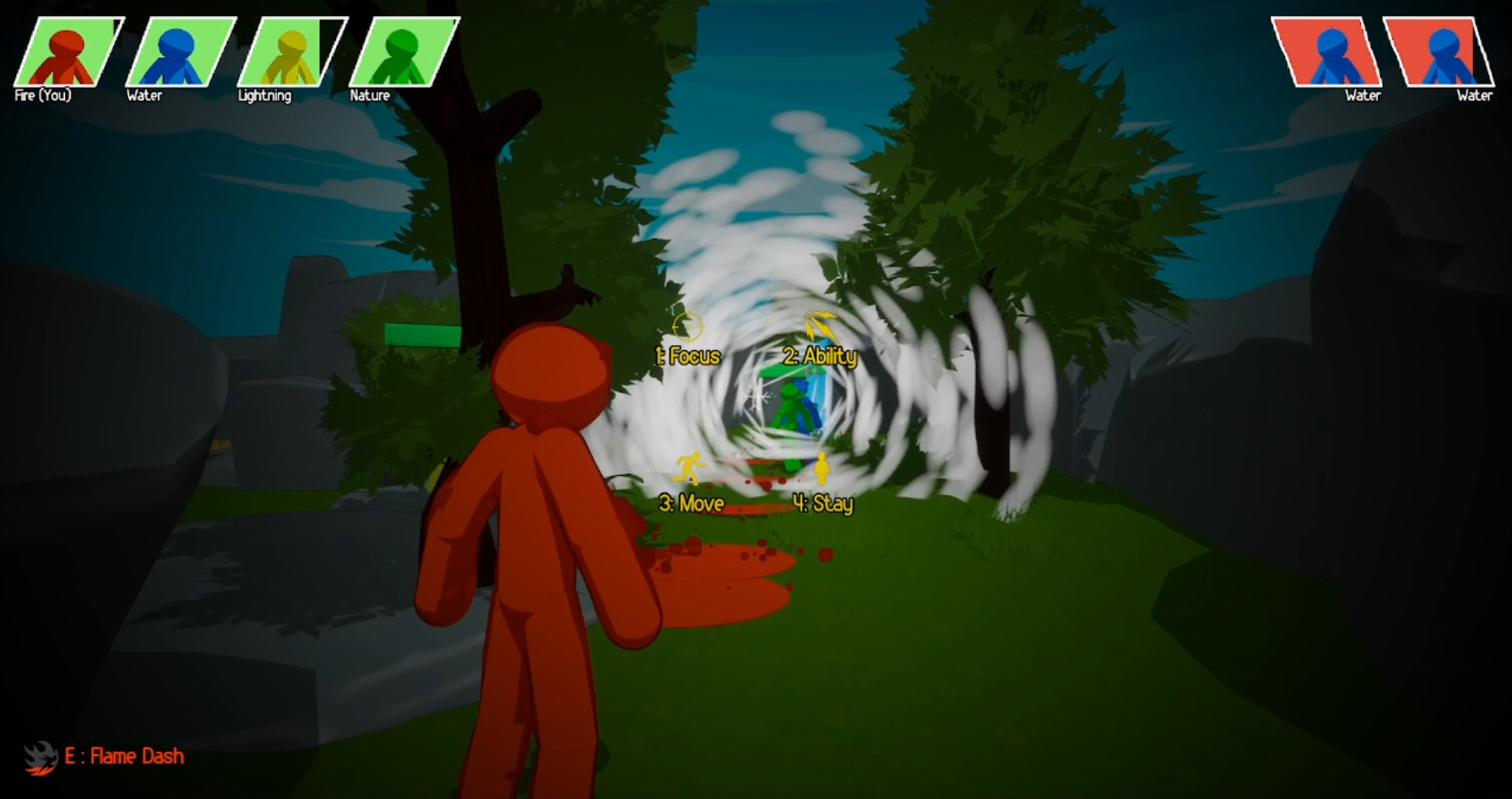
- I wanted to investigate the same companion command design in the new format and further iterate on its implementation and player interaction with companions
- Expanded the Teamup Systems with reworked & completely new companion abilities, encounter design and combat pacing
- Redesigned encounter structure by introducing four elemental companions and enemies, each with weaknesses and strengths to certain other elements
- The Third person view created new design challenges around visibility, battlefield awareness and companion readability, forcing me to rethink how command systems were communicated to the player
- Through this iteration I found that companions became most engaging when they enhanced player decision-making rather than working independently or relying on the player constantly
- I wanted to investigate the same companion command design in the new format and further iterate on its implementation and player interaction with companions
- Expanded the Teamup Systems with reworked & completely new companion abilities, encounter design and combat pacing
- Redesigned encounter structure by introducing four elemental companions and enemies, each with weaknesses and strengths to certain other elements
- The Third person view created new design challenges around visibility, battlefield awareness and companion readability, forcing me to rethink how command systems were communicated to the player
- Through this iteration I found that companions became most engaging when they enhanced player decision-making rather than working independently or relying on the player constantly
AI Design & Technical Implementation
- Implemented companion behaviours using modular blueprint systems and built scalable ability systems supporting individual abilities, ability interaction (named Teamup Abilities), and future expansion
- Taught myself Unreal Engine 5's AI State Tree and Behaviour Tree framework during development, using it to manage enemy states, intent and combat actions in a more scalable and maintainable way
- Designed AI logic to remain responsive to player commands without removing player agency, ensuring that companions supported player decisions rather than resolving encounters without the player
- Taught myself Unreal Engine 5's AI State Tree and Behaviour Tree framework during development, using it to manage enemy states, intent and combat actions in a more scalable and maintainable way
- Designed AI logic to remain responsive to player commands without removing player agency, ensuring that companions supported player decisions rather than resolving encounters without the player
Research, Playtesting & Iteration
- Throughout the entire project, I constantly hosted playtesting sessions with friends and people from my course to evaluate companion usage and player behaviour; for both design iterations
- Identified situations where players defaulted to solo combat play and adjusted incentives, for example adding shields that require the player to order companions to target specific enemies
- Iterated on ability cooldowns, UI communication & intuitiveness, and encounter design all based off observed and documented player behaviour
- Concluded that companions become more engaging when they function as extensions of player agency and offer unique game-changing opportunities for the player
- Identified situations where players defaulted to solo combat play and adjusted incentives, for example adding shields that require the player to order companions to target specific enemies
- Iterated on ability cooldowns, UI communication & intuitiveness, and encounter design all based off observed and documented player behaviour
- Concluded that companions become more engaging when they function as extensions of player agency and offer unique game-changing opportunities for the player